Распознанный текст (OCR Internet Archive), не вычитан. Лицензии
impossible. Afterwards, as the action of the cutting whip or driving whip causes the croup to be raised, the hind legs are raised higher than the fore ones, and the neck is necessarily depressed. But in the piaffer, as in the passage, the fore legs ought always have the loftier action, which is the case when these movements are taught only by the help of the hands
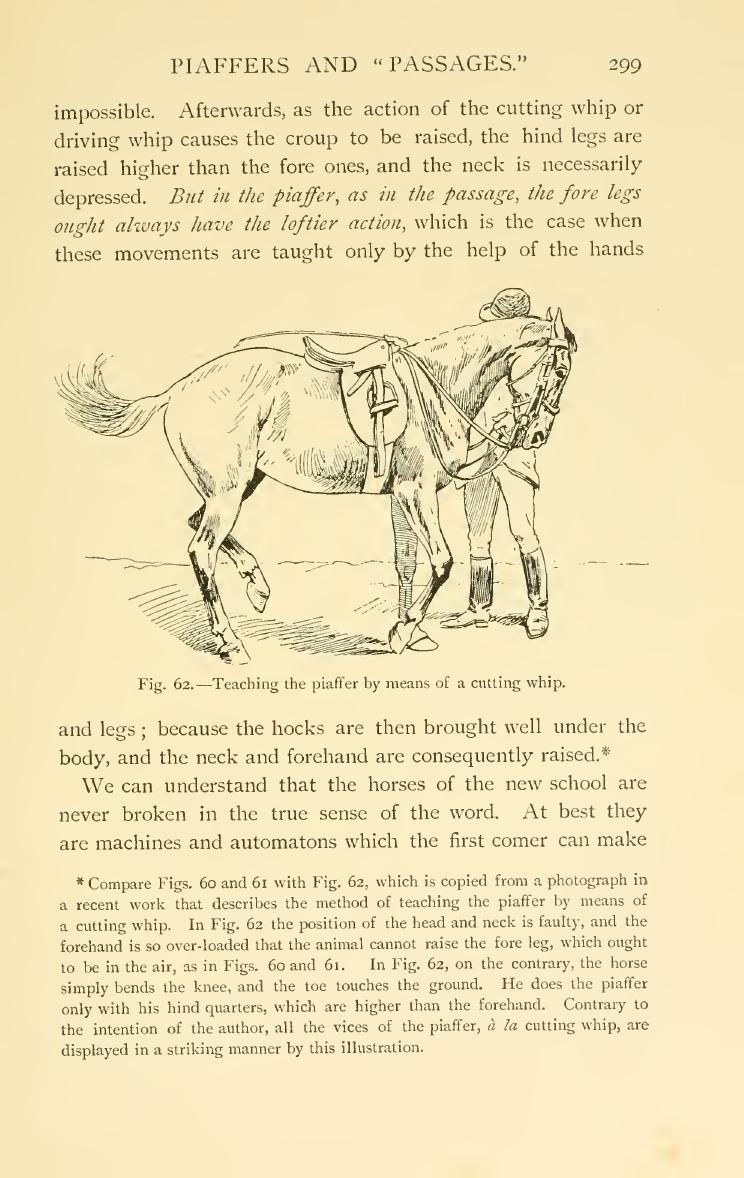
Fig. 62.—Teaching the piaffer by means of a cutting whip.
and legs; because the hocks are then brought well under the body, and the neck and forehand are consequently raised.[1]
We can understand that the horses of the new school are never broken in the true sense of the word. At best they are machines and automatons which the first comer can make
Compare Figs. 60 and 61 with Fig. 62, which is copied from a photograph in a recent work that describes the method of teaching the piaffer by means of a cutting whip. In Fig. 62 the position of the head and neck is faulty, and the forehand is so over-loaded that the animal cannot raise the fore leg, which ought to be in the air, as in Figs. 60 and 61. In Fig. 62, on the contrary, the horse simply bends the knee, and the toe touches the ground. He does the piaffer only with his hind quarters, which are higher than the forehand. Contrary to the intention of the author, all the vices of the piaffer, à la cutting whip, are displayed in a striking manner by this illustration. ↩︎