Распознанный текст (OCR Internet Archive), не вычитан. Лицензии
forward by the propulsion given by the horse ; second, to lighten the forehand, which, on coming to the ground, will have to bear all the weight of both horse and rider ; and, third, to keep his seat and support his horse in case the animal's forelegs give way.
When a horse brushes a fence with his forelegs, and raises
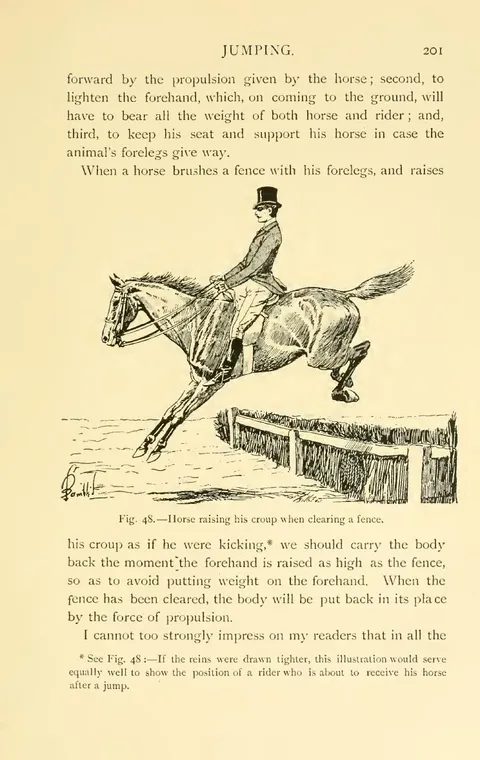
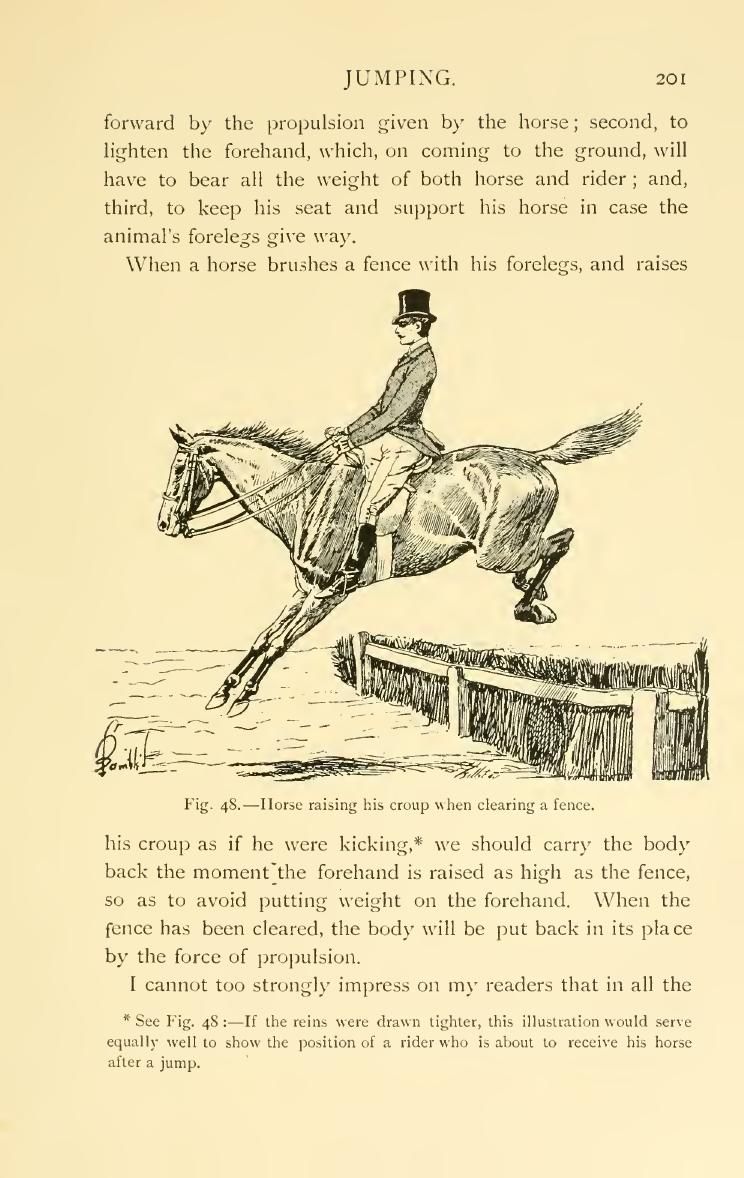
Fig. 48.—Horse raising his croup when clearing a fence.
his croup as if he were kicking,[1] we should carry the body back the moment the forehand is raised as high as the fence, so as to avoid putting weight on the forehand. When the fence has been cleared, the body will be put back in its place by the force of propulsion.
I cannot too strongly impress on my readers that in all the
See Fig. 48 :—If the reins were drawn tighter, this illustration would serve equally well to show the position of a rider who is about to receive his horse after a jump. ↩︎